The brink of famine in Kenya
Ntaine Ole Taiko has walked hundreds of kilometres over the past four weeks. The long rains have not come in Kajiado, Kenya.
This proud Maasai herder has been forced across the border into Tanzania and back, in a desperate search of pasture for his cattle. And all to no avail. Of his herd of forty cows, only ten remain. Some of them have to be lifted to reach the small patches of grass, as they are too weak to walk. If they don’t survive, he does not know how he will feed his children.
No ordinary year
Everywhere we go in Kajiado, we hear the same story. This is no ordinary year. In the arid lands where the Maasai make their lives, drought is a feature of life. Every five years or so, the rains fail. The people have to resort to coping strategies such as eating wild foods to survive.
Climate change
But now, climate change has hit Kenya with a vengeance. This is the third failed rainy season in a row. It’s getting harder and harder for people to cope.
Rebecca Korino doesn’t know how old she is, but she has lived a long time. She stresses that only twice before in her life has she seen such a serious situation, in 1962 and in 1974. “But then”, she says, “we could afford to buy food to tide us over. Now prices are so high that is no longer possible.”
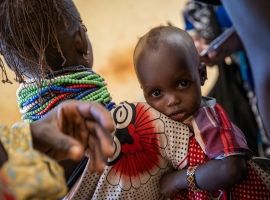
Cattle carcasses are strewn across the land. Some estimate that up to 80% of cattle have been lost. Concern has already provided hay for cattle feed. Tragically, we already know that in the months ahead it will not be the cattle that need feeding, but the people. “Famine is coming,” I am told again and again.
Responding quickly
Kenny Matampash, a Maasai himself and head of the local voluntary organisation that we work with, tells us how he appreciates Concern. “Concern is so prompt. I call them, and within two days, they are here on the ground, listening and understanding the problems. And the support quickly follows so we can respond.”
With the current financial situation and aid cuts, we in Concern are fearful that this ability to respond swiftly is in danger. In Ireland, we know the cost of a famine that is not one year long, but that repeats and repeats. This is what the Maasai are dealing with.
Related links
Our bloggers
Blog archive
- March 2010 (3)
- February 2010 (2)
- January 2010 (2)
- December 2009 (8)
- November 2009 (7)
- October 2009 (7)
- September 2009 (8)
- August 2009 (8)
- July 2009 (4)
- June 2009 (3)


Comments
We are working with indigenous communities who are at the front line of climate change, helping them set up a network of media hubs. Among them are the Maasai communities of Kenya and Maasai NGO Mpido. There is a 6 minute video clip on the internet that tells the shocking plight of Maasai. It was made in April 2009. Got to www.conversationsearth.org The project, Conversations with the Earth (CWE) is an indigenous-led multimedia campaign that, through strengthening indigenous voices in the global climate change discourse, empowers indigenous peoples in their struggle for climate justice. CWE urgently conveys to the global audience local accounts of the impacts of climate change on indigenous communities, stories of the unintended consequences of imposed mitigation efforts on local livelihoods, and examples of traditional knowledge playing a significant role in developing appropriate responses to climate change. CWE asserts indigenous peoples’ inherent rights to their territories, lands, and resources, and enables meaningful dialogue between indigenous communities and the wider society about the solutions to the common challenges of changing climate. In solidarity Nick Lunch Director, Insightshare Oxford UK.
Post new comment