Read our 2025 annual report

Knowledge Hub
 Blog
BlogImproved Local Flour in CAR: What it Takes to Sustain Community-Led Nutrition Solutions
How can families improve young children’s diets when nutritious foods are costly, external funding is uncertain and supply chains are under pressure? This was the challenge facing many households in Ouaka, in the Central African Republic (CAR), where diets often rely heavily on staple foods such as cassava. While cassava is widely available, it is naturally low in essential nutrients. Over time, limited dietary diversity can contribute to micronutrient deficiencies and increase the risk of malnutrition.
Why local alternatives matter
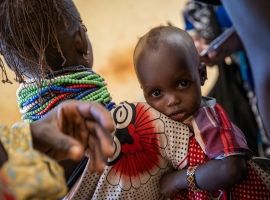
Malnutrition remains a major public health concern in CAR, particularly in Ouaka, regularly classified as being in an alert or critical nutritional situation. Nationally, according to the IPC, 29.8% of the population is undernourished, and it was estimated that more than 228,500 children ages 6-59 months would suffer from acute malnutrition between March 2025 and February 2026, including over 61,500 cases of severe acute malnutrition. This reflects a combination of insecurity and population movement, low household incomes, climate shocks, rising food prices, high levels of infectious disease and limited access to safe water and adequate sanitation. Pregnant and breastfeeding women and children under two are among those most affected.
Humanitarian organisations often respond through imported, processed and fortified nutritional products. These can play an important role in preventing malnutrition, but they depend on external funding and international supply chains and are rarely accessible to the most vulnerable households once project support ends. Enriched local flours are sometimes available on local markets, but their cost can also place them beyond the reach of many families. As funding pressures grow, organisations are therefore paying renewed attention to locally produced alternatives that draw on ingredients available through local markets and agricultural systems.

Between September 2024 and August 2026, Concern and Acted implemented the project ‘Promotion de la résilience nutritionnelle et promotion de l'égalité de genre au sein des ménages vulnérables de la Ouaka’, funded by the French Ministry for Europe and Foreign Affairs. The project tested whether locally produced improved flour could become a sustainable, affordable and community-led option within resilience programming, and what would be needed for families and communities to continue producing it after direct project support ended.
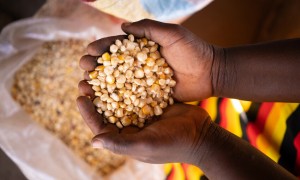
The project worked directly with 670 families to promote improved local flour made from affordable, locally available ingredients, including cowpea, sesame, groundnut and maize. Cooking demonstrations at nutrition education centres shared preparation techniques and encouraged complementary feeding using local foods. The approach aimed to improve the quality of young children’s diets while strengthening household self-reliance. Awareness-raising sessions therefore focused not only on nutritional knowledge, but also on practical skills that families could continue to apply after the project ended.
Improved local flour offers a promising complement to specialised nutritional supplements, particularly where funding and supply chains are under pressure. The project also reported wider changes in household practices, including improved hygiene behaviours and a 154 per cent increase in reported male involvement in childcare.
The project also points to a wider lesson for nutrition programming: locally available ingredients are only part of the solution. For improved flour to remain viable after external support ends, communities also need reliable input supplies, functioning equipment and clear systems for managing production.

What made local production difficult?
The project aimed to shift gradually from externally supplied inputs to production by participating families. In practice, two constraints limited this transition.
- Delays in seed distribution disrupted the agricultural calendar, preventing sufficient local production from being established before the project ended.
- Use of the mills remained limited because of breakdowns, maintenance difficulties and weak management arrangements. The final evaluation found that one quarter of the mills were already out of working order by the end of the project, mainly due to breakdowns and a lack of spare parts.
These constraints do not undermine the relevance of improved local flour. Instead, they show that technical solutions need practical systems around them. Communities may have the skills to produce improved flour, but sustainability also depends on timely access to seeds, functioning mills, maintenance arrangements and clear local management. The lesson is straightforward: improved local flour can support nutrition prevention when local supply and management systems are planned from the start.

Designing local solutions to last
This points to the need to treat improved local flour not only as a nutrition intervention, but as part of a wider food systems approach. This means planning for agricultural production, household and market access to inputs, income-generating opportunities and the functioning of local markets.
One opportunity lies in strengthening local input production chains. Agricultural Seed Multiplier Groups could be mobilised earlier and more systematically to multiply and distribute the seeds needed for the crops used in improved local flour. This would help secure supply after the project ends and embed flour production within a more self-sufficient local value chain, reducing dependence on external support.
Mills also need to be managed as part of a community-led income-generating activity, rather than treated only as shared equipment. A management committee could oversee their use, organise routine maintenance and ensure transparent management of any income generated. A simple business plan would help define service terms, user contributions and how revenue should be allocated. This income could cover operating costs such as petrol, oil, repairs and spare parts, and could also support the purchase of inputs or seeds when local production is insufficient. This would help keep the mills in use, support regular maintenance and improve access to the ingredients needed for improved local flour.
For practitioners and programme designers, the key takeaway is clear: local nutrition solutions need to be designed as systems, not stand-alone activities. Improved local flour can support nutrition prevention when communities have the skills, inputs, equipment and management structures to keep producing it after external support ends. Building these conditions from the start can help turn a promising project intervention into a more durable, locally owned approach.
Organisations who fund us
French Ministry for Europe and Foreign Affairs

French Ministry for Europe and Foreign Affairs
1/1
Partner organisations
ACTED

ACTED
1/1
 Flagship Programmes
 Global Hunger Index