Read our 2025 annual report
Knowledge Hub
 Blog
BlogLast-mile Health Supply Chains in Sierra Leone
In Sierra Leone, getting essential medicines and medical supplies to remote health facilities can be difficult. Poor roads, long distances, heavy rains and coordination gaps can all delay deliveries. When stock does not arrive on time, pregnant women, new mothers, children under five and other vulnerable groups are often the most affected.
Through the Saving Lives Phase III (SLiSL-3) programme, partners worked with the Ministry of Health, the National Medical Supplies Agency, District Health Management Teams (DHMTs) and community stakeholders to strengthen last-mile distribution across six districts. The experience showed that when districts lead planning and coordination, and communities are involved in oversight, supply chains can become more reliable even in difficult operating environments.
The approach
A key strength of the last-mile approach was that it reinforced district leadership rather than creating a parallel system. DHMTs led planning and implementation, with support from national actors and consortium partners. Daily coordination meetings, route mapping, distribution matrices and regular debriefs helped teams identify problems early and respond quickly.
Accountability was also central to the approach. Signed waybills and receipt verification by Facility Management Committees (FMCs), chiefs, youth leaders and other community representatives helped confirm that commodities reached the intended facilities. This strengthened transparency and built trust between communities and the health system.
The programme also provided practical support to make delivery possible, including fuel, vehicle maintenance, printing of tools, training for distribution teams and flexible transport options such as boats, ferries, motorbikes and off-road vehicles. This adaptability was especially important during the rainy season, when standard delivery routes were often disrupted.

What last-mile distribution looked like in practice
Across Quarters 2 and 3 of 2025, the approach was implemented in several districts. In Moyamba and Bombali, 189 Peripheral Health Units (PHUs) were reached within 5 days during the peak rainy season. Teams used off-road vehicles, motorbikes, canoes and ferries to reach remote and riverine communities, while daily coordination and real-time reporting supported rapid problem-solving.
In Kenema, 134 health facilities received Free Healthcare Initiative commodities through a coordinated exercise involving the DHMT, the National Medical Supplies Agency and community stakeholders. In Kono, all 111 PHUs were reached following extensive picking and packing activities, underlining the value of district ownership, advance planning and community participation.
However, implementation was not the same in every district. In Kambia and Western Area Urban, fuel delays, vehicle maintenance issues, storm damage to storage space and internet connectivity problems affecting the supply system created challenges. Teams adapted by adjusting schedules, carrying out preparatory activities at the same time as other tasks, repurposing temporary spaces for packing and maintaining close coordination across actors. These adaptations helped keep deliveries moving despite significant constraints.
Lessons learned
- District leadership matters. When planning and decision-making are led locally, teams can respond more quickly to operational problems and keep deliveries on track.
- Community participation strengthens accountability. Involving community structures in receipt verification helped improve transparency and increase confidence that medicines were reaching the intended facilities.
- Flexibility is essential in hard-to-reach settings. The ability to shift transport methods, adjust schedules and repurpose available space helped districts continue operating through heavy rains and infrastructure challenges.
- Combining distribution with supportive supervision, spot checks and refresher training improved data accuracy, stock management and compliance with procedures. Together, these elements strengthened delivery performance while also contributing to the wider resilience of the health system.
Why this matters beyond Sierra Leone
This experience offers a practical reminder that strengthening supply chains is not only about moving commodities. It is also about how systems are organised, who leads decision-making and how communities are involved. In Sierra Leone, district-led coordination and community engagement helped improve the availability of essential medicines in difficult contexts, while offering wider lessons for strengthening health systems in other hard-to-reach settings.

 Learning Paper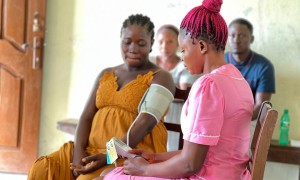
 Flagship Programmes