




Read our 2025 annual report


Knowledge Hub
 Blog
BlogMore than Failed Rains: The Compounding Impacts of Climate, Conflict and Global Instability
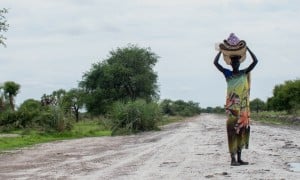
Across the arid and semi-arid lands of eastern Africa, from northern Kenya and southern Ethiopia to Somalia and Sudan, daily life is closely tied to the seasonal rains. Farmers depend on rain-fed agriculture, while pastoralist communities move with their livestock in search of pasture and water. For generations, people have adapted to these dry landscapes, relying on the timing of rains such as the Gu and Deyr to support crops, livestock, and livelihoods.
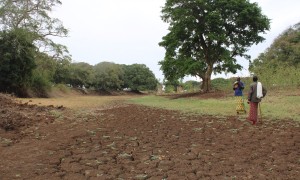
Over the last six years, increasingly unpredictable rains have contributed to the region’s longest drought in more than 40 years, disrupting the lives and livelihoods of communities who depend on these seasonal patterns. Although conditions eased temporarily in 2023, the outlook remains uncertain. Drought is a major part of the story, but it does not explain the scale of the crisis on its own. Food insecurity across the Horn of Africa is also being intensified by conflict, rising global prices, disrupted supply chains, and declining humanitarian funding.
More than 24 million people across the Horn of Africa are now facing crisis and emergency levels of food insecurity. Farmers are struggling to access seeds, fertiliser, and other agricultural inputs in time for planting. Pastoralist communities have lost livestock that sustained families for generations. Many households are also finding it increasingly difficult to access safe water. These pressures show how climate, conflict, markets, and humanitarian capacity are shaping the food security crisis across the region.
Concern’s experience across the region shows that supporting communities through overlapping shocks requires both immediate assistance and longer-term investment in resilience, from helping families access safe water and maintain nutrition to protecting livelihoods and supporting recovery after repeated climate and economic shocks.

Food insecurity in the Horn of Africa
Food insecurity across the Horn of Africa is not simply the result of local shocks. It is increasingly shaped by disruptions in interconnected global systems, including energy markets, food systems, supply chains, transport routes, conflict dynamics, and the climate system. What is unfolding across the region is not a short-term humanitarian emergency driven only by failed rains. It is the result of climate instability, regional conflict, economic fragility, and geopolitical shocks combining into a single, growing threat to people’s lives and livelihoods.
Communities facing severe food insecurity in Somalia, Ethiopia, Sudan, and Kenya are feeling the effects of crises they did little to create. Disruption in the Strait of Hormuz can raise the price of fertiliser in Ethiopia. Insecurity along Red Sea shipping routes can delay imports and interrupt humanitarian assistance to countries such as Somalia and Sudan. Rising fuel prices can determine whether emergency water trucking reaches drought-affected communities, whether livestock feed is distributed, and whether humanitarian agencies can respond at the scale required.
Conflict and energy markets
The recent conflict involving Iran and the wider region has affected global energy markets, particularly fuel supplies. Around one-fifth to one-quarter of global seaborne oil passes through the Strait of Hormuz, including exports from Saudi Arabia, Iraq, Kuwait, and Qatar. As tensions continue, companies transporting oil through the region have faced delays, rerouting, higher insurance costs, and the risk of blockages. These disruptions can push global oil and fuel prices upward, with consequences felt far beyond the Gulf.
Although oil market disruption may seem geographically distant from the Horn of Africa, their effects can be felt quickly. Many communities rely on fuel to power generators for clean drinking water, transport food and medical supplies, support humanitarian operations, and enable access to agricultural inputs such as fertiliser. At the same time, climate-related crop failures, economic fragility, and dependence on imported goods have left many countries in the Horn of Africa highly exposed to global price shocks. As fuel costs rise and food systems come under strain, moving food, water, and other essential supplies becomes more expensive, while basic staples and agricultural inputs can become harder for communities to access.
The war in Sudan
The war in Sudan is another major driver of worsening food insecurity in the wider region. Since the conflict began in April 2023, millions of people have fled violence, placing additional pressure on neighbouring countries and already stretched humanitarian systems, including in Ethiopia and South Sudan. The conflict has also disrupted trade routes and food markets, while insecurity has made it harder for humanitarian agencies to move supplies and reach people in need. At a time when drought, economic instability, and high food prices are already pushing millions across the Horn of Africa towards crisis, the war in Sudan is further heightening regional instability and compounding hunger beyond its borders.

Climate change
Climate change is acting as a threat multiplier across the Horn of Africa. Rising temperatures and erratic rainfall are reducing agricultural production and weakening communities’ ability to recover between shocks. Seasons that were once more predictable have become uncertain, with successive failed rains contributing to devastating multi-year droughts, including between 2020 and 2023. When rain does arrive, it can come late and in heavy bursts, falling on dry, compacted ground and triggering flash floods. For communities already coping with failed harvests, livestock losses, displacement, and dependence on humanitarian assistance, there is little capacity left to absorb another failed season or destructive flood.
Declining humanitarian funding
Humanitarian funding has been weakened by successive cuts to overseas development assistance, while shifting political priorities have reduced attention to some of the countries and regions most dependent on external support. Climate finance also remains inadequate, especially in fragile and conflict-affected contexts where adaptation and resilience are often deprioritised. This leaves humanitarian agencies trying to respond to growing needs with fewer resources. For communities already facing drought, displacement, conflict, and rising prices, one additional shock can push families into emergency conditions before they have recovered from the last crisis.

Food insecurity in the Horn of Africa is not only about failed rains, poor harvests, or drought. It is the result of overlapping pressures: climate change, conflict, economic instability, rising global prices, disrupted supply chains, and a humanitarian system operating with too few resources. In an interconnected world, decisions made thousands of kilometres away can affect whether communities can plant crops, protect livestock, access clean water, or receive humanitarian assistance.
Across the Horn of Africa, farmers and pastoralists are once again waiting for rains that may or may not come, while food prices rise, livestock losses deepen, and access to water becomes increasingly uncertain. These crises are not isolated. They reflect the interaction of global systems that are failing to protect the people most exposed to conflict, climate change, and economic shocks. Responding to hunger in the region therefore requires not only emergency support, but also sustained investment in resilience, climate adaptation, food systems, and humanitarian access.
Concern’s work in the region therefore focuses not only on meeting urgent needs, but also on supporting communities to strengthen resilience to the climate, conflict, and economic shocks that are making each crisis harder to recover from.
Why are more communities struggling simply to access water?
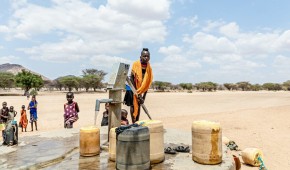
Communities across the Horn of Africa are increasingly struggling to access water as repeated droughts dry rivers, shallow wells, and traditional water sources. Rising temperatures accelerate evaporation and deplete groundwater faster than it can recharge. Conflict and insecurity can restrict access to water infrastructure, while displacement places additional pressure on scarce resources. Rising fuel prices also make water trucking, pumping, and generator-powered boreholes more expensive. Years of underinvestment in water infrastructure across arid and conflict-affected areas have deepened vulnerability, making water insecurity a climate, economic, and political challenge.
For Concern, this makes water access a critical part of both emergency response and resilience work, particularly in communities where drought, displacement, and rising fuel costs are placing safe water further out of reach.
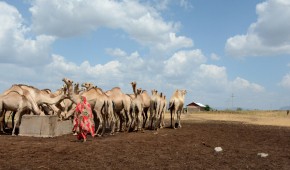
Why have pastoralists across the Horn of Africa lost entire herds that sustained families for generations?
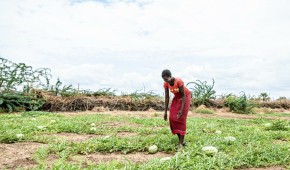
Why are farmers in the Horn of Africa struggling to access fertiliser as conflict escalates across the Middle East?
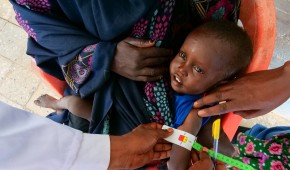
Why are millions of people across the Horn of Africa facing worsening hunger and food insecurity?
 Flagship Programmes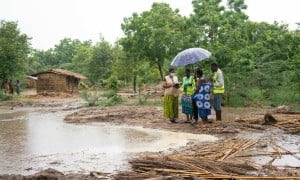
 Article