



Read our 2025 annual report

Knowledge Hub
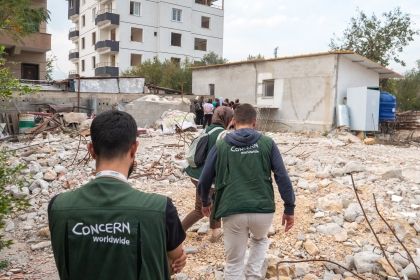
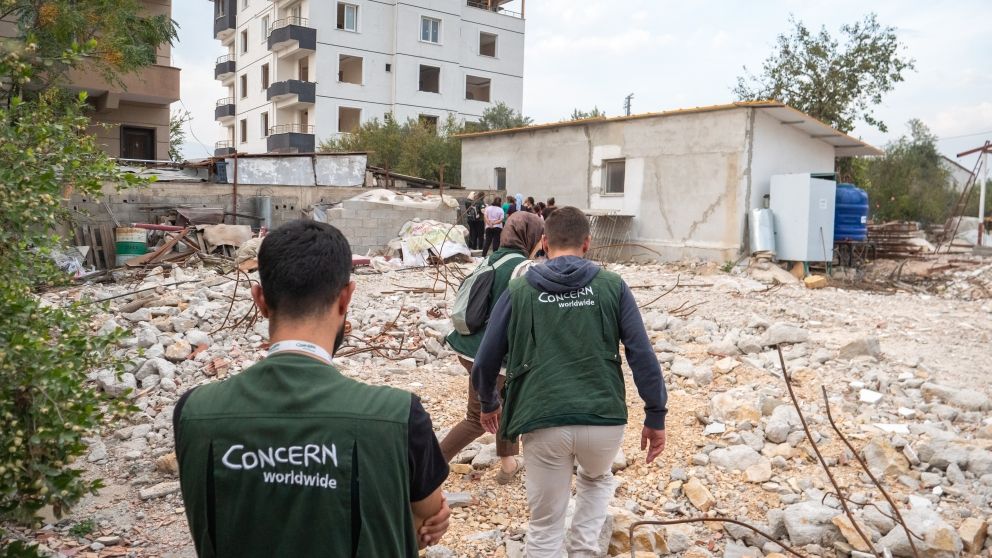
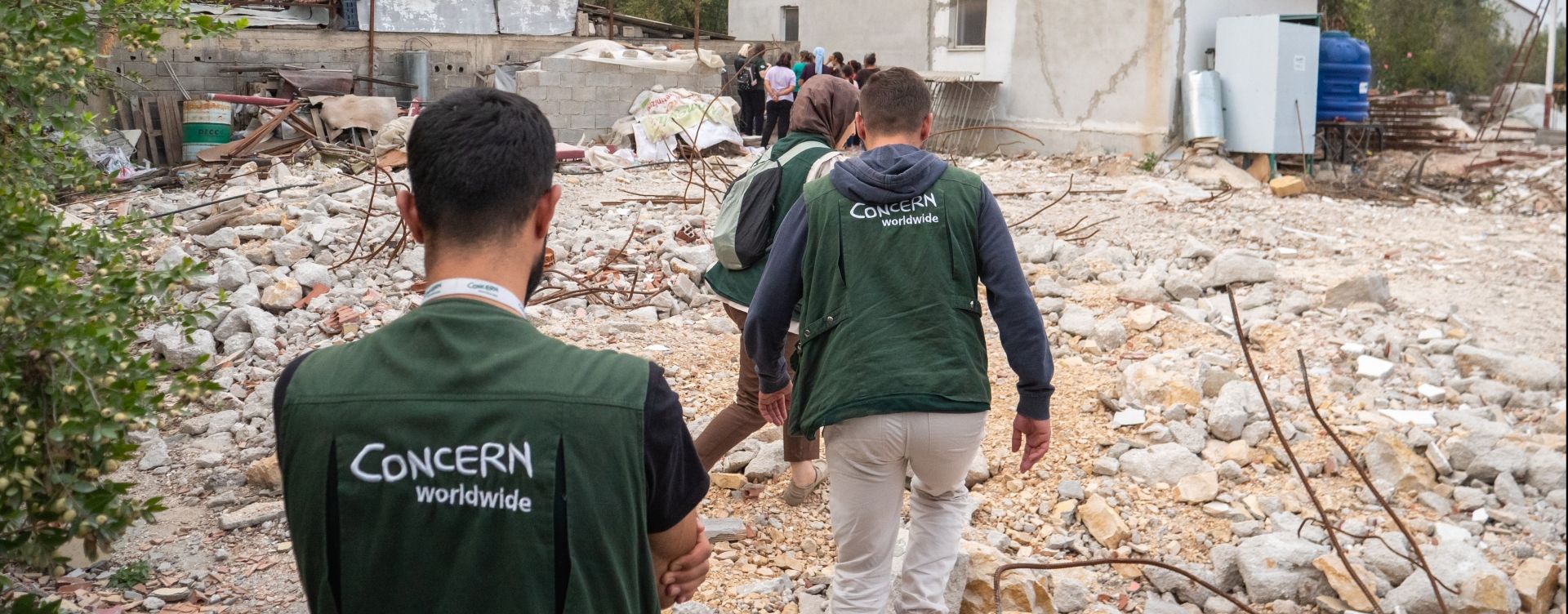
Concern’s work tackles the causes of extreme poverty in our 24 countries and territories of work, to ensure that nobody is left behind.
Much of our work is in long-term development, working with people living in extreme poverty to help them achieve major improvements in their lives which last and spread without ongoing support from Concern. But an important part of our mission is responding to emergencies.
Many of the countries we work in are susceptible to frequent natural disasters - like floods and earthquakes - and outbreaks of conflict, resulting in already vulnerable people losing their homes and livelihoods, and even their lives.
In 2025, we responded to 45 emergencies in 22 countries, reaching 5.6 million directly and 10 million indirectly.
In the immediate aftermath of an emergency, we provide life-saving support to families and communities. We then stay to help them get back on their feet, rebuilding livelihoods and infrastructure and working to reduce the risk and impact of future crises. We mobilised to support people within Ukraine when conflict struck in 2022. When two devastating earthquakes hit Nepal in 2015, we were there within 48 hours. We remain in Gaza, working through partners, nearly three years on from the outbreak of the current conflict.
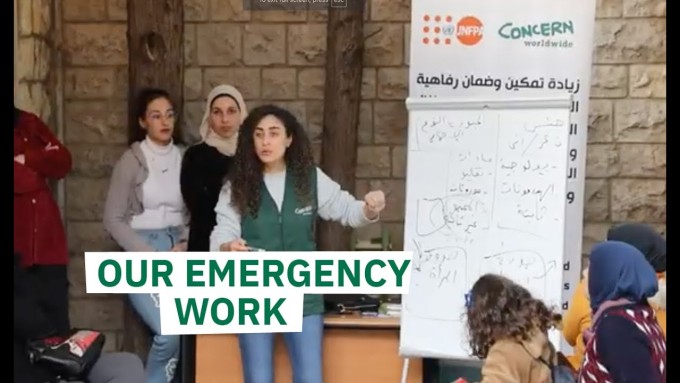

When you donate to an emergency appeal, you are helping us to respond rapidly, improve access to food, healthcare and water, and prevent and reduce the impact of future emergencies. From providing shelter to displaced people, to treating malnourished children, your support can save lives.
Here are some examples of your emergency donation at work.
Chad and Sudan

Mahamat and Aziza were forced to flee their home in Sudan when conflict came to their village. As well as bringing their own infant daughter Khadjidja, they were looking after Aziza’s niece Hanane, after her mother died during childbirth. The family travelled for four days, without food and water. “It was a dangerous journey,” said Aziza. “We were thinking, we could meet people on the road that could beat us or kill us.”
They found safety in Zabout refugee camp in Chad, but things were extremely difficult here. While Mahamat previously worked as a teacher in a mosque, he was unable to work in the camp, or grow food for his family. When their baby girls began to cry constantly, Aziza took them to a nearby hospital, which was supported by Concern.
She said: “I used to give them my breast milk, but I soon realised that was not enough for them. I took them to hospital in Goz Beida. Here, they were checked, and they told us that our children were sick with malnutrition. As a mother to not only my daughter, but my sister’s daughter, I was feeling sad.”
Thankfully, our team was able to give Khadjidja and Hanane emergency therapeutic food, a nutrient- and calorie-rich peanut paste that helped them regain their strength. “Since the babies received their treatment, I can notice a big improvement in their bodies and in their lives,” Aziza said. “Back then, they had lost a lot of weight, but now, I can see that they are healthy.”
Ukraine

In 2022, 23-year-old Sofiy* and her mother Zoya* fled their home in the Kherson region of Ukraine when conflict broke out. In August 2025, they lost their home again, when overnight strikes hit their rented home in the Sumy region. “It happened in a split second,” Sofiy shared. “Everything scattered instantly. Luckily, my mom had just moved into my room. We survived by miracle, because the wall collapsed directly onto the bed.”
Sofiy and her mother managed to escape through a window with their pets and a few undamaged belongings and documents, but were left with nowhere to live. Within 48 hours of the attack, the team from JERU - Joint Emergency Response in Ukraine, a partnership between Concern and Welthungerhilfe - issued cash assistance to affected residents.
With this money, Sofiy and Zoya were able to secure immediate shelter and cover their essential needs at a time of crisis.
*Names have been changed.
Democratic Republic of the Congo

Concern has worked in the Democratic Republic of the Congo since 1994, and we previously responded to the Ebola outbreak in the Kivu region in 2018. We also had experience responding to the devastating West Africa Ebola epidemic in 2014, through our teams in Sierra Leone and Liberia. So when an outbreak of Ebola virus was reported in May 2026, our staff on the ground were ready to respond.
Fear and misinformation can spread quickly during an outbreak, making it harder for families to protect themselves and seek care when they need it. That makes community outreach one of the most important aspects of an effective outbreak response – for any outbreak. We work with communities, local leaders, journalists, and volunteers to share accurate information about how Ebola spreads, how to recognise its symptoms, and how to prevent risk of infection, and also support this outreach by organising sessions, distributing posters and factsheets, airing radio messages, and helping to facilitate behavioural change that can help stop the spread – such as eating bush meat or utilising safe burial practices.
We also continue to deliver sanitation services and PPE so communities can protect themselves against the spread.
