
Read our 2025 annual report


Knowledge Hub
 Blog
BlogAddressing a new climate reality: why we’re working in Pakistan
In 2025, Concern Worldwide, began working to strengthen resilience against floods and heatwaves in the Matiari and Shaheed Benazirabad districts of Pakistan under the Zurich Climate Resilience Alliance. As the 15th most climate-vulnerable countries and with a population of 241 million, the devastating impacts of climate change in Pakistan are amplified by high poverty levels, fragile regions and a heavy reliance on climate-sensitive agriculture.
Barkat Ali, a 52 year old farmer from Daltaar Pur, lives with his wife, children, and elderly parents. Farming has supported his family for generations, but extreme heat, floods and water shortages now threaten both crops and survival as agriculture becomes increasingly unreliable. Livestock also suffer from rising temperatures, forcing farmers to cool animals in the canal water multiple times a day.

“We have lost 5-7 people, mostly children and elderly, to the heat. Before, we would begin work at 8 or 9 in the morning. Now we must start at 5 a.m. and stop by noon. The heat makes it impossible. We spend money, labour, and time, but in the end, we lose most of it. Farming no longer feeds our families the way it used to.”
Barkat’s story reflects countless farming families in Sindh: resilient but exhausted, adapting each day while waiting for support against relentless floods and heatwaves.
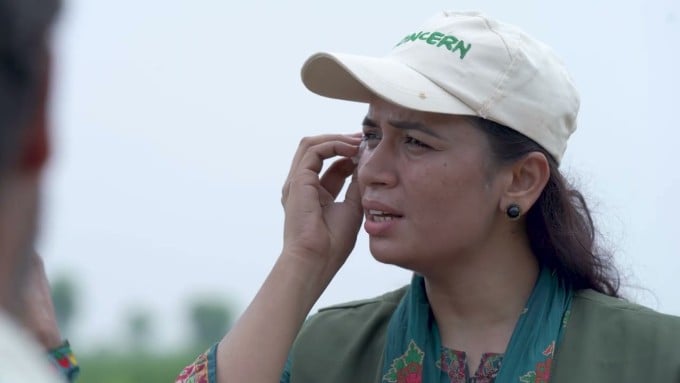
 Extreme Weather Is Destroying Pakistani Villages. Here's What We Found
The growing burden of climate impacts on communities
The 2022 floods were a catastrophe that submerged one-third of the country, affecting 33 million people, claiming over 1,700 lives, and unleashing $30 billion in damages and losses, wiping out 1.2 million livestock, ruining farmlands, and displacing 8 million into debt and despair. Aid poured in $8.5 billion pledged but mostly as loans, chaining recovery to more debt. Fast forward to 2025, where floods from the Sutlej and Ravi rivers flooded 8 districts in Punjab, affecting 3.9 million people and displacing 1.9 million. The Indus Basin, the country’s lifeline with over 200 million people living here, supports over 90% of the country’s agriculture and is the world’s second most stressed aquifer.

Throughout May and June 2026, many areas such as Sindh, Shaheed Benazirabad, and Sakrand recorded temperatures up to 50°C, making Pakistan one of the hottest places globally due to a combination of strong high-pressure atmospheric systems and a lack of rainfall. Karachi’s 2015 heatwave caused 1,400 deaths and 65,000 hospital admissions, while record temperatures of 52°C in 2024 led to 568 deaths and over 5,000 hospitalisations. Sanofi, a leading global pharmaceutical company, supported heat health assessments which confirmed that these early and prolonged heatwaves are increasingly lethal, with rising cases of dehydration, heatstroke, preterm births, and respiratory distress.
These overlapping climate stresses erode public health, strain local services, and deepen food insecurity and gender inequality, disproportionately affecting landless farmers, women headed households, pregnant women, outdoor workers, elderly people and people with disabilities and chronic illnesses. These events are no longer anomalies but part of Pakistan’s climate reality.
Driving community led change in Pakistan
Together with communities, government authorities, and local partner Sami Foundation, Concern Pakistan is using the Climate Resilience Measurement for Communities tool (CRMC) and Community Resilience Action Plans to strengthen resilience in Shaheed Benazirabad and Matiari—low-lying Indus Basin hotspots highly exposed to floods and heatwaves.
A key focus has been on strengthening Disaster Risk Management and Climate Change Adaptation planning by linking Community Action Plans with the three tiers of the local government system; Union, Tehsil and District levels. Concern is also providing technical support and organising learning events on multiple hazards, Early Warning Systems and Disaster Risk Management planning to increase the capacities of village committees, Union Council Disaster Committees, and government authorities. This will ensure that there is no gap between local realities and formal planning processes.

One of the key findings from the CRMC in Shaheed Benazirabad and Matiari was that communities don’t receive early warning messages about impending floods or heatwaves, or they don’t understand the message received and what actions to take. Using technical expertise from the Pakistan Meteorology Department, Concern is supporting communities to implement timely alerts and early actions for heatwaves by providing technical sessions on how to understand and act against heat and flood warnings.
Furthermore, Concern is also working with communities to increase resilience through nature-based interventions by providing technical support to farmers. Through the Farmer Field School, we have been establishing community plant nurseries, and providing locally adopted agroforestry plants to community farmers. The curriculum for the school will be developed according to the priorities of the farmers, with training sessions focused on topics such as three sister gardening and keyhole gardening . By increasing green cover and sharing lessons on how to make soil more nourishing, agriculture activities can continue through heat and flood events, ensuring that farmers do not lose any income and families do not go without food.

In the face of extreme heat and floods, Concern's community led resilience work in Shaheed Benazirabad and Matiari districts is bridging the gaps between local realities and formal disaster planning. By combining our work on Early Warning Systems, nature-based adaptation and resilience, and Disaster Risk Management at the community and systems change levels, our work is helping vulnerable communities to build resilience, protect their lives and livelihoods in one of the most climate exposed regions.

 Policy Brief
 Flagship Programmes