Read our 2025 annual report

Knowledge Hub
 Policy Brief
Inclusive Climate Governance in Sindh, Pakistan
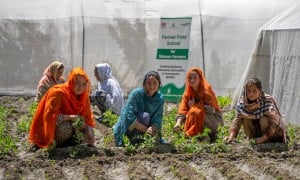
In the Sindh province of Pakistan, inequality is embedded in social structures, and climate resilience is shaped by gender, age, disability, class, access to land and information, and voice in governance. Women, girls, persons with disabilities, elderly people, and landless labourers face the greatest risks from floods, droughts, and heatwaves. Despite progressive policies, climate governance remains centralized and gender-blind, and it fails to recognize community-led local adaptation actions such as early warnings, maintaining flood embankments, and home-based sustainable livelihoods.
Under the Zurich Climate Resilience Alliance, this policy brief highlights the barriers and practical solutions to institutionalize gender equality and social inclusion (GESI) within Sindh’s climate governance through the principles of locally led adaptation (LLA).


 Flagship Programmes