


Read our 2025 annual report

Knowledge Hub
 Blog
BlogBeehives for Resilience Building in Kenya
In the harsh, dry landscapes of Tana River County, Kenya, women in Handaraku village are using beekeeping to build resilience against climate hazards, generate income, strengthen savings and solidarity, and help protect local ecosystems with support from Concern Worldwide as part of the Zurich Climate Resilience Alliance.
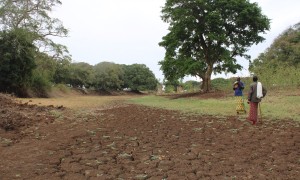
Tana River’s climate is defined by extremes: long stretches of intense heat and dryness punctuated by erratic rains. Sometimes the rain fails entirely, leading to drought. Other times it arrives in excess, causing destructive floods, especially along the riverbanks. This cycle makes traditional farming and livestock keeping increasingly difficult.
As a result, beekeeping is emerging as a practical, nature-based approach to resilience. Under increasingly erratic rainfall patterns, beekeeping is highly adaptable as bees respond quickly to changing conditions and can take advantage of short flowering periods following sporadic rains, making honey production more flexible and less dependent on predictable seasons.
It is also less resource-intensive and less tied to a single location, enabling it to better withstand and recover from floods, droughts, and irregular weather patterns. During prolonged heat and drought, bees can forage over wide areas for nectar and water, unlike crops or pasture confined to specific plots that may fail completely. While drought can reduce flowering and temporarily lower honey yields, it does not usually result in total livelihood loss in the way crop failure or livestock death can.
Through beekeeping and related advocacy on forest conservation, the Handaraku women’s group has recognised the link between healthy forests and their livelihoods. As bees move from flower to flower, they transfer pollen than enables plants to reproduce, producing seeds and fruits that sustain crops, wild plants, and natural vegetation.

The Handaraku women’s journey
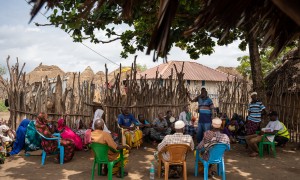
Before beekeeping, members of the community mainly relied on crop farming, livestock rearing, and charcoal burning as key sources of livelihood income. Repeated droughts and floods caused major losses, and efforts to secure support from NGOs and government institutions were unsuccessful. Determined not to give up, the women strengthened their organization through weekly meetings and a rotational savings system, creating a foundation for collective action.
Following a participatory and community-led assessment, the group identified beekeeping as an activity to diversify livelihoods and income and build resilience. Concern Worldwide supplied the group with ten modern Langstroth beehives, alongside training on modern beekeeping, hive management, pest and disease control, harvesting and processing, and basic marketing to sell their honey.
By identifying an alternative, this initiative has reduced their reliance on environmentally destructive activities, while increasing their motivation to conserve the habitats that support bees, pollination, biodiversity, and their livelihoods.

Beyond honey: transforming lives
The modern hives were placed in a single apiary on a raised platform and managed collectively. The raised platform protects the hives from being submerged or washed away during floods, ensuring a more reliable income source, while also making honey harvesting easier. These modern hives also consist of movable frames that allow for routine inspection, improved hive management, and non-destructive honey harvesting unlike traditional log hives, which are difficult to inspect and often require harvesting methods where beekeepers have to cut or break open the top of the comb to access the honey, resulting in destruction of the comb and hive structure, thereby disrupting the colony’s ability to continue using the hive. The women also tried two traditional log hives suspended in trees, but after one harvest the bees abandoned them. The group therefore continued using the modern hives.

After six months, the modern hives produced around 8-15kg of honey per harvest, compared with just 3-8kg from traditional log hives. Of this, 60 kg was sold and 20 kg shared among members. Honey sales generated approximately 40,000 Kenyan shillings (KSh), which the group reinvested in livestock and put into savings. The group now owns three male cows and seven male goats, which are supported by fodder conservation as part of Concern’s system strengthening work. Communities also use their apiculture income to purchase fodder during severe droughts.
The group’s savings now enable members to cover school fees, medical costs, and emergencies, strengthening financial inclusion and social cohesion that they were unable to do so previously, while reinforcing the importance of conserving trees and flowering vegetation that sustain bees and pollination services.
Creating a buzz across Tana River Country
The Handaraku women plan to expand their beekeeping activities by purchasing additional modern hives, strengthening skills in apiary management, and exploring new markets for honey and other bee products.
The success of the initiative has generated strong local uptake. The county government and several NGOs have replicated the beekeeping model with other farmer and women’s groups across Tana River County, recognising its potential to strengthen climate resilience, diversify livelihoods, and support women’s economic empowerment.
As the approach continues to gain momentum, the Handaraku women look to build on their achievements,; inspiring other communities to invest in nature-based livelihood options that generate income, while supporting the ecosystems on which rural livelihoods depend.

 Flagship Programmes
 Learning Paper