
Read our 2025 annual report


Knowledge Hub
 Blog
BlogThe Realities of Adapting from Floodplains to Eco Villages
Tana River County in Kenya, home to over 315,000 people, has long faced recurring floods. As climate change intensifies, rainy seasons bring increasingly devastating floods that destroy homes, farms, roads and lives, leaving families struggling to rebuild what little they have. To address this, the Tana River County government launched the Eco-Village Cluster Programme which aims to relocate 60,000 people from flood-prone zones or wetland areas to higher grounds.
One such cluster is Bandi; where the aim is for households to become socially, economically, and ecologically resilient to floods and adopt smart agricultural climate solutions that enhance their livelihoods. The long-term plan is for the county government to work with the national government and development partners to provide much needed basic services to communities residing in these eco- villages.

The Bandi Community
Bandi is a rural community with a population of 2000 people across 357 households. Initially located on elevated land protected with dykes, the 1997 El Nino breached the dykes, claiming the lives of 20 community members and destroying 100% of the houses, making them susceptible to flooding once again.
Twice a year the community was exposed to recurring riverine and fluvial floods that occurred during the peak rainy seasons, resulting in widespread destruction of houses and livestock being carried away by floods, leaving residents displaced and economically vulnerable. As a result, residents were forced to evacuate to the Minjila-Lamu roadside. Following severe flooding in 2018, the entire community relocated here for two years, only returning to their village to farm, fish, or graze their livestock and eventually rebuild their houses.
After the floods in November 2023, that once again broke through the reconstructed dyke, the Bandi community permanently relocated close to the Garsen-Minjila Highway as part of the Tana County Government Eco-Village Programme.

Expectations Vs Reality
The eco-village offers the Bandi community a piece of land on which to build shelter and assets protected from future floods. Families have built semi-permanent homes (made from either iron sheets or mud walls mixed with stones) with access to safe and reliable water from two connections. Concern Worldwide supported the community with a pipeline extension from the main county clean water system (managed by the Tana Water and Sanitation Company; TAWASCO), and constructed water kiosks and yard taps as part of the community’s action plan. Following lobbying engagement with TAWASCO, Bandi now receives a subsidised water rate of 2 Kenyan shillings per household (previously 35 Kenyan shillings). Concern helped establish a water committee, training its members to manage the kiosks, collect payments and communicate with TAWASCO, encouraging sustainability.

Our community has suffered so much from flooding, every year we struggle to get back on our feet. Although it has been a challenging adjustment, it is reassuring to know that when the rain comes, we will not have to move. We have constant access to clean water thanks to Concern and have learnt how best we can come together and advocate for our rights.

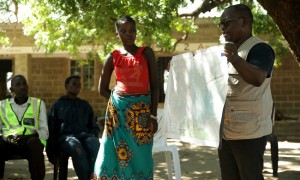
Concern has also empowered Advocacy Champions to attend and participate in public participation forums, including the opportunity to lobby the government on the issues of land title deeds, the construction of houses and schools, and a minor irrigation scheme. However, presently not all their expectations have been met.
Daily life for the community remains extremely challenging due to limited livelihood opportunities. Most households still depend on livestock and farming on flood‑prone land 16 kilometres from the eco‑village, making income unpredictable and basic needs difficult to meet. To fully realise the eco‑village concept and ensure sustainability, further investment is required in infrastructure such as apiculture, livestock enterprises and irrigation systems.
Although the programme aimed to support all flood‑affected households with permanent structures, only 137 households in Bandi received assistance, leaving 220 households in the Bandi and Gadeni cluster living in tarpaulin shelters due to funding gaps. The community also lacks construction skills, vegetation‑clearing capacity, electricity and WASH facilities.
While the eco‑village’s location allows better access to markets and health services, the nearest facility is still 3 kilometres away. However, recent advocacy by the Zurich Climate Resilience Alliance has helped secure the construction of a primary school and a mosque by the government and a private donor, improving access to education and strengthening community morale.

Recovery to resilience
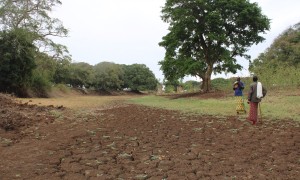
For the people of Bandi, recovery has become a way of life but so has resilience. Despite moving to higher ground, the community continues to return to its farmland. Each year, once the floodwaters recede, families take advantage of the moist and fertile silt to plant crops (on their cultivated lands. This flood-recession farming system helps to secure household food security in the months following and allows them to sell surplus produce.
Aside from stability from flood displacement, relocating to an eco-village has brought numerous benefits including lowered living costs, improved accessibility by being situated next to the road as opposed to the previous location in the village which was isolated during floods; and a reduction of waterborne diseases away from the flood zone. The gap highlights the need for partnerships between the county and national governments as well as development partners to fulfil the eco-villages concept as a sustainable and replicable solution to flooding and displacement.


 Flagship Programmes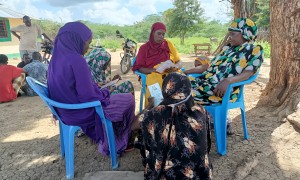
 Learning Paper