Read our 2025 annual report

Knowledge Hub
 Blog
Growing resilience through community-led permagardens in Somalia: How women farmers are improving nutrition, food security and livelihoods with climate-smart agriculture
Building resilient food systems at community level remains a priority across many of the contexts where Concern works. Yet establishing productive and sustainable gardens can be challenging, particularly in areas affected by climate shocks, water scarcity and limited access to agricultural inputs.
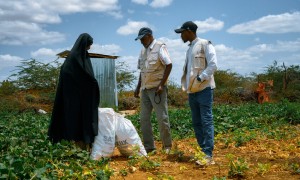
In Somalia, Concern and its partner Lifeline Gedo have been addressing these challenges through the Irish Aid-funded Preventing Wasting in Madera Triangle (PWIMT) programme. Working through Mother-to-Mother Groups in the Gedo region, women farmers received training and technical support to improve soil fertility, manage water resources and grow diverse, nutritious crops using locally available materials and resources. Through community permagardens, participants applied climate-smart and agroecological farming practices to increase food production and diversify household diets.

What is a permagarden and why does it matter?
A permagarden is more than a vegetable garden. Drawing on principles of permaculture and bio-intensive agriculture, it is designed to maximise food production on small plots of land while making sustainable use of natural resources. Through techniques that improve soil health, conserve water and promote crop diversity, permagardens enable households to produce nutritious food that is available from production in the permagardens or accessible in markets from sale of surpluses throughout the year.
Beyond food production, the approach offers wider benefits for households and communities. By relying on locally available resources and climate-smart practices, permagardens can improve access to diverse and nutritious foods, strengthen resilience to climate-related shocks and reduce dependence on external agricultural inputs. They can also create opportunities for income generation through the sale of surplus produce, while promoting community participation, learning and knowledge sharing.
Because permagardens are rooted in local knowledge and collective action, they can support communities to develop sustainable solutions that continue beyond the lifespan of a project, strengthening both household resilience and community ownership.
As a result, permagardens can be particularly valuable in contexts where food insecurity, poor dietary diversity and environmental pressures limit access to healthy and sustainable food sources.

Women at the centre of the approach
In the Gedo region, eight groups comprising 40 women farmers from Mother-to-Mother Support Groups put the approach into practice. As the programme sought to prevent child wasting and improve nutrition among vulnerable households, particularly pregnant and breastfeeding women and young children, women were placed at the centre of the initiative. This reflected their role as primary caregivers and key decision-makers in meeting household food and nutrition needs. It also recognised women's significant contribution to agricultural production and their role in sharing and promoting new practices within their communities, making them well positioned to drive the adoption and spread of the permagarden approach.
Participants established and collectively managed demonstration plots, applying climate-smart and agroecological farming techniques to improve soil fertility, manage water resources and grow vegetables for both household consumption and sale. Rather than relying on external inputs or externally managed sites, the permagardens were designed around locally available resources and active community participation, enabling farmers to adapt the approach to local conditions and priorities.
While many participants initially questioned whether they could successfully work together, the groups gradually built trust, shared responsibilities and developed thriving permagardens. Community ownership proved central to the initiative's success, helping participants sustain the gardens and continue applying the approach over time.

Household meals have increased from one to three times per day thanks to harvesting vegetables and selling the surplus to generate income.
One participant, Koos Abdi Ali, a lead farmer and member of a Mother-to-Mother Support Group in Bantal community, described the changes she has observed since introducing vegetable production through a permagarden approach:
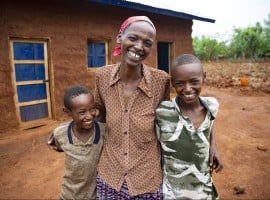
"Usually during the dry spell period from January to March, many young children were suffering from various diseases because of their poor physical condition. But since we have been using leafy vegetable crops, the incidence of disease has drastically reduced among young children in the Bantal community. Household meals have increased from one to three times per day thanks to harvesting vegetables and selling the surplus to generate income. This has enabled families to purchase other essential foods, improving household food and nutrition security and reducing cases of malnutrition and illness, including skin diseases and diarrhoea. "
The benefits extended beyond household consumption. Surplus vegetables created opportunities for income generation and community savings:
"We sell the surplus of our vegetable crops and save money as a group. Any member who has a special need can access a loan. I borrowed 4,000 Ethiopian Birr (approximately USD 26) and used it to pay school fees and buy uniforms for two of my children."
Koos’ experience illustrates how permagarden initiatives can contribute not only to improved diets but also to household resilience and financial wellbeing.

What the Somalia experience shows: lessons learnt
The Somalia experience offers several insights into how community-led permagarden initiatives can contribute to food security, nutrition and resilience. Three factors proved particularly important to the success of the approach:
-
Women farmers can be powerful agents of change in promoting and spreading new agricultural practices. In Somalia, women were not only the primary participants in the permagarden initiative but also played a key role in sharing knowledge and encouraging the adoption of improved farming techniques. Through field days, exposure visits and peer-to-peer learning, Mother-to-Mother Group members helped demonstrate the benefits of the approach to other community members. Notably, programme staff observed individual women farmers continuing to apply and promote permagarden practices independently, without ongoing external support, highlighting their potential role in sustaining and spreading innovation within farming communities.
-
Permagardens can strengthen resilience to climate shocks and seasonal food shortages. By applying climate-smart agriculture practices, including improved water management, soil moisture retention and crop diversification, households were able to maintain vegetable production throughout the year, including during dry periods when food availability is often most constrained. The approach also contributed to improved crop productivity more broadly. In the programme area, maize yields increased from approximately 1 tonne per hectare to 1.5 tonnes per hectare following the adoption of climate-smart practices, alongside the production of a wider range of food crops. This not only improved access to nutritious foods but also enabled households to preserve staple crops for future consumption, helping to reduce seasonal hunger gaps and strengthen their ability to cope with climate-related shocks.
- Building on existing community structures can strengthen ownership, learning and long-term sustainability. In Somalia, the initiative worked through existing Community-Based Organisations (CBOs) and Social-Based Organisations (SBOs), using Mother-to-Mother Groups as an entry point for implementation and knowledge sharing. These groups provided a platform for peer learning, community mobilisation and the dissemination of improved farming practices, while supporting wider livelihood improvement efforts. Several members also took on leadership and agricultural extension roles, helping organise training sessions, coaching, field days and community meetings. Working through established community structures not only strengthened local ownership of the permagarden approach but also supported the continued spread of knowledge and practices beyond the original participant groups.

The Somalia experience demonstrates that building resilience is not only about introducing new agricultural techniques. It is also about strengthening the capacity of communities to organise, learn from one another and adapt to changing circumstances. Through community-led permagardens, women farmers improved access to nutritious food, generated additional income and helped spread new practices within their communities.
As climate change and food insecurity continue to affect vulnerable households, experiences such as those from Gedo show how locally rooted approaches can contribute to more resilient food systems while improving nutrition and livelihood outcomes.

 Flagship Programmes